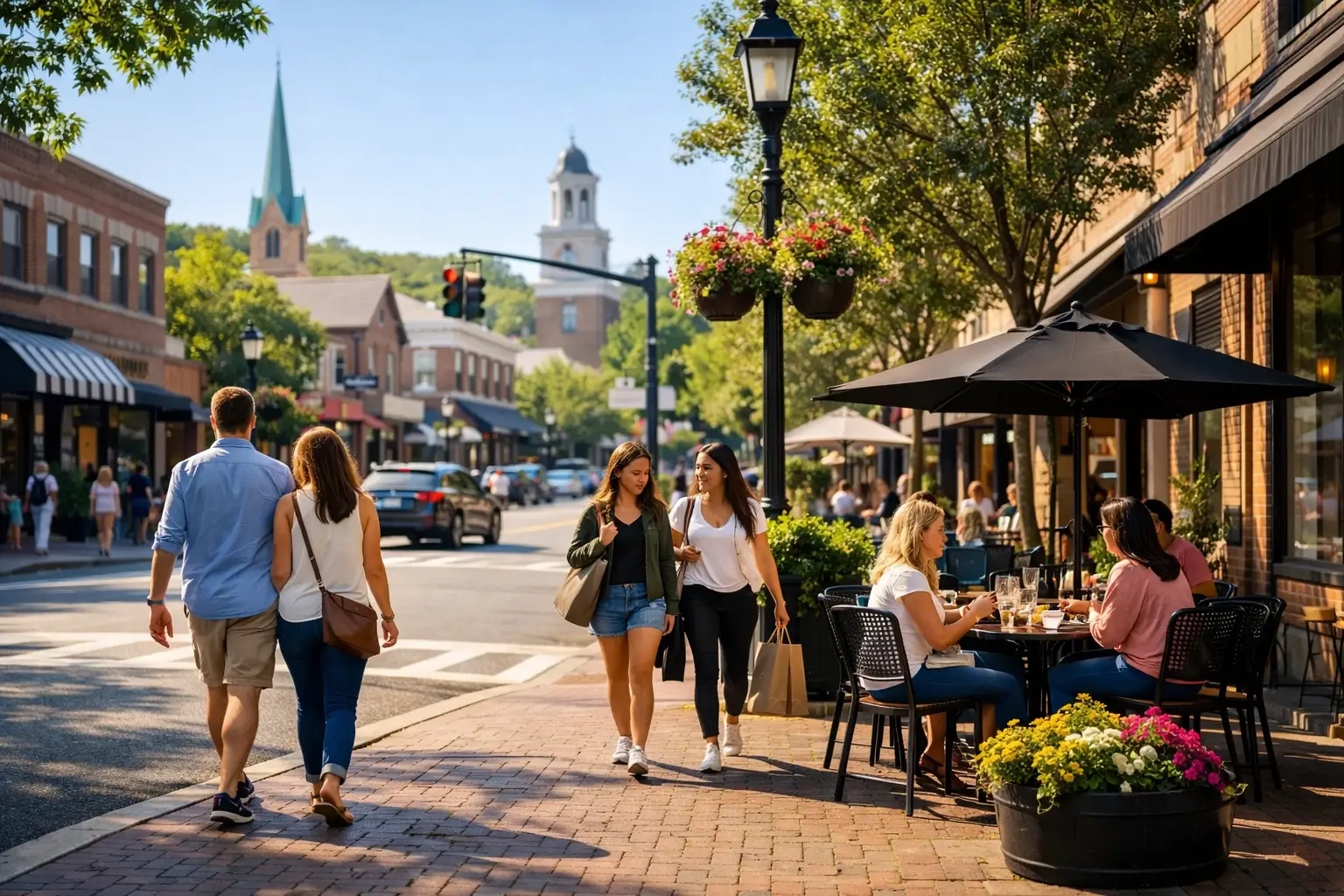
A home that is technically close to downtown can feel very different from one that lets you walk there comfortably with a stroller, groceries, or a dog on a Sunday morning. For buyers comparing walkable Bergen County neighborhoods, the details matter: sidewalk continuity, rail access, hilliness, traffic crossings, and whether daily errands are actually nearby.
Bergen County is not uniformly walkable, and that is part of its appeal. It offers everything from dense, transit-oriented downtowns to quiet residential streets where driving remains essential. The right choice depends on how you define walkability and which parts of daily life you want within reach.
What Walkability Means in Bergen County
In this market, walkability usually centers on one of three lifestyles. The first is a true downtown lifestyle, where restaurants, coffee shops, grocery options, services, and transportation are all nearby. The second is a rail-centered lifestyle, where buyers want to walk to a train station but may still drive for larger errands. The third is a village-center setting, with a compact downtown and pleasant sidewalks, but a more suburban rhythm once you move a few blocks away.
A map can be useful, but it does not tell the whole story. A home a half-mile from a station may be an easy 10-minute walk on flat, well-lit streets, or a less practical route involving busy intersections and limited sidewalks. Buyers should also consider how a neighborhood functions after the workday. Does it have places to eat, exercise, shop, and meet friends, or does the activity end at the train platform?
For families, walkability can also mean access to parks, libraries, schools, and youth activities. For commuters, it may mean a predictable route to NJ Transit or a bus line. For downsizers, it often means reducing dependence on multiple cars without giving up neighborhood character.
Walkable Bergen County Neighborhoods Worth Comparing
Ridgewood: Downtown Energy With a Residential Feel
Ridgewood is often one of the first towns buyers mention when they want a lively downtown and rail access. Its central business district offers a broad mix of restaurants, shops, services, and community activity, while the train station is integrated into the downtown area. Many nearby streets provide a practical walk to both the station and daily amenities.
The trade-off is demand. Homes near downtown, especially those with attractive streetscapes and manageable station access, can command a premium. Buyers should compare blocks rather than assume every Ridgewood address delivers the same experience. Some areas are walkable to the village but farther from parks, schools, or the train, depending on a household's priorities.
For sellers, proximity to downtown and the station should be positioned carefully and accurately. A buyer who values a walkable lifestyle will notice the real route, not just the distance listed in a marketing description.
Westwood: A Compact Downtown and Strong Everyday Convenience
Westwood offers one of Bergen County's more approachable downtown settings. The town center is compact, active, and close to the train station, with restaurants, local services, and community events that give the area a connected feel. Housing options near downtown range from older homes to condos and townhomes, creating choices for different stages of ownership.
Westwood can be particularly appealing for buyers who want a downtown they can use regularly without the intensity or price point found in some larger Bergen County destinations. As with any rail-adjacent area, evaluate train schedules, parking patterns, and noise on the specific block. A home close to the tracks may be highly convenient, but convenience and quiet do not always arrive in the same package.
Rutherford: Urban Convenience Near Manhattan Routes
Rutherford has a distinctly walkable downtown along Park Avenue, where restaurants, shops, and services create a more urban-suburban mix. Its rail station adds appeal for commuters, and many residential streets are within reasonable walking distance of the business district.
The town's location is a major part of the decision. Rutherford can work well for buyers who want access to New York City and northern New Jersey employment centers while still preferring a neighborhood of single-family homes, apartments, and local businesses. Inventory, lot sizes, and architectural styles vary considerably by section, so buyers should avoid treating the town as one uniform market.
Traffic and commuter patterns deserve attention here. A walkable downtown is valuable, but buyers should experience rush-hour conditions and assess how easily they can reach the roads or transit routes they will actually use.
Hackensack: The Most Urban Option in the County
Hackensack is a different type of walkable choice. As the county seat, it has a denser environment, multifamily housing, medical facilities, dining, retail, and access to public transportation. Recent and ongoing redevelopment has also made it a market to watch for buyers seeking newer condominium or apartment-style living near services.
For some households, Hackensack offers the practical benefit of having more daily needs close by. For others, the density, traffic, and street activity may feel less aligned with their idea of suburban Bergen County. It is best evaluated block by block, with close attention to building type, parking, management, transit access, and the immediate surroundings.
Buyers considering a condo should look beyond the unit itself. Monthly fees, reserves, rental policies, parking arrangements, and future building assessments can affect both affordability and resale flexibility.
Englewood: Restaurants, Culture, and a Central Business District
Englewood's downtown gives buyers access to restaurants, shops, cultural destinations, and everyday services, with a more established city feel than many Bergen County towns. Certain nearby residential areas allow residents to walk to the center while retaining a traditional neighborhood setting.
Englewood is especially worth considering for buyers who value dining and local activity, as well as access to nearby employment and major roadways. However, public transportation needs should be evaluated based on the specific commute. Unlike a town built around a rail station, an Englewood commute may rely more heavily on bus service or driving.
Housing choices range widely, from apartments and condos to substantial single-family homes. That range can create opportunity, but it also means comparable sales must be selected carefully when pricing or making an offer.
Fort Lee: High-Rise Living and Walkable Services
Fort Lee is one of Bergen County's strongest options for buyers who want a more vertical, urban residential environment. Its density supports restaurants, markets, fitness options, and services within walking distance of many buildings. For commuters using buses to Manhattan, its location near the George Washington Bridge is a central draw.
The lifestyle is not for everyone. Traffic can be significant, and condominium or co-op ownership comes with building-specific financial and operational considerations. Still, for buyers who want fewer yard responsibilities, convenient services, and a direct connection to New York City, Fort Lee can offer a compelling alternative to a traditional suburban home.
How to Test a Neighborhood Before You Buy
The most useful walkability research happens on foot. Visit at more than one time of day, including a weekday morning or evening if commuting is important. Walk from the home to the station, downtown, park, school, or grocery store rather than relying on a mileage estimate.
Pay attention to crossings, lighting, snow removal, sidewalk conditions, and how comfortable you feel carrying bags or walking with children. A route that looks short online may feel inconvenient if it requires crossing a major road. Likewise, a home slightly farther from downtown may offer a much better pedestrian route than one closer in distance.
School considerations should be evaluated separately from walkability. A desirable downtown location does not automatically align with every family's preferred school assignment, transportation arrangement, or school-day routine. Confirm current information directly and consider how the location works for your household's actual schedule.
The Value Question for Buyers and Sellers
Walkability can support demand, but it is not a guaranteed premium in every situation. In many Bergen County markets, homes near a respected downtown, a train station, or a well-used park attract more interest because they offer lifestyle flexibility. That can be particularly meaningful for buyers who are relocating and want an easier transition into a new community.
At the same time, the strongest location may not be the closest one. A house directly across from a busy commercial area, rail line, or high-traffic road can face a different buyer pool than a house several blocks away on a quiet residential street. Pricing requires a balanced view of convenience, condition, lot characteristics, and the specific competition available at the time of listing.
A good neighborhood match is not simply about being able to walk somewhere. It is about being able to walk to the places that make your week easier and your weekends more enjoyable. Before committing to a town, spend time on the blocks you are considering and let the daily routine, not just the listing description, guide the decision.