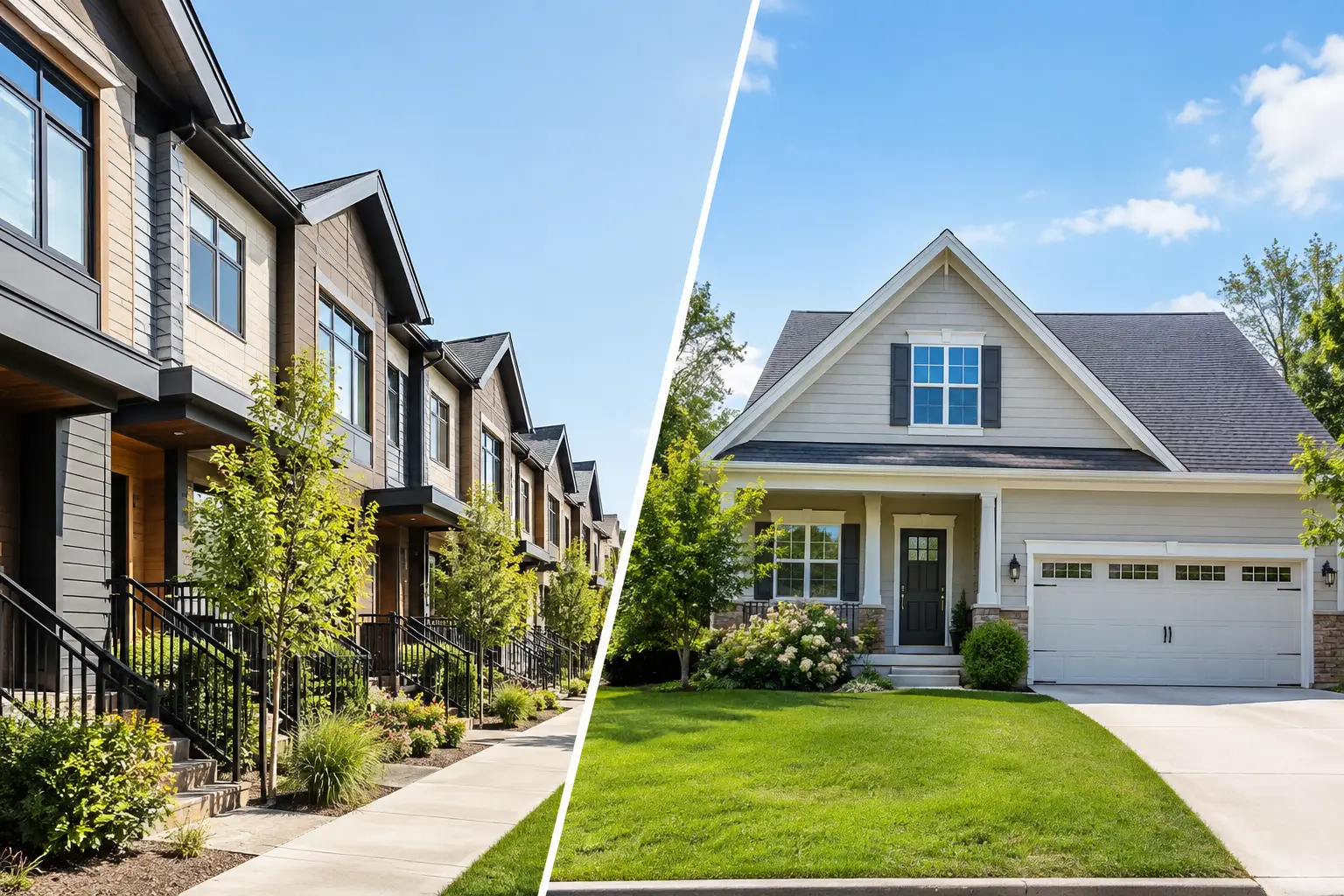
A Saturday morning can make the difference feel very real. One buyer may want to spend the day at a Bergen County soccer field, not mowing a lawn. Another may picture a detached home with a driveway, a backyard for the dog, and room for relatives to visit. Townhouse versus single family living is not simply a question of square footage. It is a decision about time, privacy, monthly costs, location, and how you want your home to function over the next several years.
In Northern New Jersey, both options can be strong choices. The better fit depends on the specific community, the condition of the property, your budget, and what you are willing to manage yourself.
Townhouse versus single family living: the core trade-off
A townhouse often offers a lower-maintenance ownership experience, shared community features, and access to locations that may be difficult to afford in a detached home. A single-family home generally provides more independence, more private outdoor space, and fewer rules imposed by a homeowners association.
Neither is automatically the better investment or lifestyle choice. A well-located townhouse near a train station, downtown, or highly regarded school district may hold broad appeal. A dated detached home with major deferred maintenance can be a far more demanding purchase than a newer townhouse, even if the home looks like the traditional next step.
The key is to compare the total living experience, not just the listing price.
Purchase price is only the first number
Townhouses can create an entry point into towns where detached homes are priced at a premium. In many Bergen County and nearby Northern New Jersey communities, that can allow buyers to prioritize a preferred commute, local amenities, or school district without stretching as far as they would for a single-family property.
But buyers should look beyond the mortgage payment. Townhouse communities frequently have monthly HOA fees. Those fees may cover exterior maintenance, landscaping, snow removal, roof reserves, insurance for common areas, trash service, or amenities such as a pool or clubhouse. What is included matters more than the fee alone.
With a single-family home, there may be no HOA fee, but the owner is directly responsible for the roof, siding, driveway, landscaping, tree care, gutters, and every repair that comes with the property. A monthly HOA payment can feel restrictive until a homeowner prices a new roof or faces a snow-covered driveway before work.
Property taxes require equally careful review. In New Jersey, taxes are highly local and are based on assessment practices, municipal budgets, and school funding, not simply whether a property is attached or detached. Compare actual tax bills for specific homes, and understand that assessed values and taxes can change over time.
Maintenance: convenience versus control
For many busy professionals, downsizers, and frequent travelers, townhouse maintenance is the central benefit. If the association handles exterior projects and common grounds, owners can spend less time coordinating vendors and more time using the home.
That convenience comes with less control. Owners may need association approval for exterior changes, windows, doors, fencing, satellite equipment, or landscaping. Rules can also affect parking, rentals, pets, and holiday displays. Before making an offer, read the HOA rules, budget, meeting minutes, insurance details, and reserve information. A well-managed association protects the community. An underfunded one can lead to special assessments or delayed repairs.
Single-family ownership gives you greater freedom to make decisions. You can renovate the kitchen on your schedule, plant the garden you want, or build a patio if local zoning allows it. The trade-off is that you are responsible for planning, paying for, and supervising the work.
Older Northern New Jersey homes deserve particular attention. Foundation drainage, aging sewer lines, oil tanks, retaining walls, mature trees, and older electrical systems can all affect ownership costs. A thorough inspection is valuable for any home, but it is especially important when evaluating a detached property with decades of updates layered over time.
Privacy, space, and daily routines
The most noticeable lifestyle difference often comes after move-in. A townhouse may share one or two walls with neighbors, even when the layout feels spacious inside. Sound transfer, parking patterns, visitor traffic, and proximity to common areas are worth evaluating during more than one showing.
Townhouses can still provide excellent space. Many offer multiple levels, finished basements, garages, and patios. For buyers who want bedrooms, home-office flexibility, and minimal exterior responsibility, that layout can work exceptionally well.
A single-family home typically offers more separation from neighbors, more storage options, and more flexibility outdoors. That can be particularly appealing for households with children, pets, hobbies, or frequent guests. Yet a large yard is only a benefit if you want to maintain it. A backyard that feels ideal in spring can become a significant weekly commitment during the growing season.
Consider your actual routines. Where will guests park? Do you need a private work area? Is a garage essential in winter? Would stairs be manageable if this is a long-term home? These practical questions reveal more than a broad property category ever can.
Location and commute can shift the decision
In Northern New Jersey, location often outweighs property type. A townhouse in a walkable neighborhood near shops, parks, and transportation may suit a household better than a larger single-family home that adds substantial time to a daily commute.
For New York City commuters, proximity to a train station, bus route, or major roadway can influence daily life and resale demand. For families, the route to school, after-school activities, and local recreation may matter just as much. A home that looks less impressive on paper can be the more practical choice when it cuts 20 minutes from a routine trip.
School assignment should always be verified by address. Municipal boundaries, district structures, and attendance patterns vary, and buyers should not assume that homes in the same general area feed into the same schools. Community fit also includes sidewalks, nearby parks, grocery access, downtown activity, and the overall feel of the neighborhood at different times of day.
Resale value depends on buyer demand
Single-family homes often appeal to the widest pool of buyers because of their privacy, land, and flexibility. In established Bergen County neighborhoods, a well-maintained detached home on a desirable street can have lasting demand.
Townhouses can also resell very well, particularly when they offer a strong location, modern condition, reasonable fees, practical parking, and a functional floor plan. Buyers frequently value turnkey living, especially when renovation costs and contractor availability are concerns.
The resale risk is rarely just townhouse versus single-family. It is more often about a specific property's compromises. A townhouse with an unusually high HOA fee, limited guest parking, or poor reserve funding may face more questions from future buyers. A single-family home on a busy road, with an awkward layout or substantial needed repairs, may encounter similar challenges.
When comparing homes, assess what the next buyer will see. Is the kitchen current enough for the price point? Is the primary bedroom layout competitive? Is the outdoor space usable? Are there restrictions that narrow the buyer pool? A local agent can help place those details in the context of the town and current competition.
Questions to answer before choosing
Before deciding between property types, put the decision in terms of priorities rather than assumptions. Ask yourself:
- How much monthly flexibility do we have after mortgage, taxes, insurance, and any HOA fee?
- Do we want to manage exterior repairs, landscaping, and snow removal ourselves?
- How important are privacy, private outdoor space, and freedom to customize?
- Which locations best support our commute, school needs, and everyday routines?
- Would we be comfortable with the HOA's rules, financial condition, and potential assessments?
These answers can change as households grow, work arrangements shift, or parents plan for aging in place. There is no need to buy a forever home if it does not serve the next meaningful chapter of your life well.
A thoughtful property search starts with the towns and routines that matter most, then narrows to the home type that supports them. The Falco Group helps buyers weigh those local details so the decision feels grounded in how Northern New Jersey actually works, not just what looks best in an online listing.