A gated driveway, a dramatic foyer, and a beautifully finished kitchen can make a powerful first impression. But for buyers considering luxury homes in Northern New Jersey, the details behind the presentation often matter far more than the finishes visible during a first showing. A home can be exceptional on paper and still be the wrong fit if its location, layout, tax structure, or daily logistics do not support the way your household actually lives.
In Bergen County and nearby communities, luxury is not defined by one price point or one architectural style. It may mean a historic home near a walkable downtown, a newer construction property with a level backyard, a private estate on several acres, or a sophisticated townhouse that makes commuting simpler. The best choice depends on how you define comfort, privacy, convenience, and long-term value.
Luxury Homes Start With the Right Location
In Northern New Jersey, location carries unusually specific meaning. Two homes with similar square footage, finishes, and lot sizes can appeal to very different buyers because they sit in different towns, school districts, commute patterns, or neighborhood settings.
For some households, proximity to a train station or major highway is central to the decision. A buyer commuting to Manhattan may value an easy route to transit more than additional acreage. Another buyer may prioritize a quieter setting, access to private or public recreation, or a neighborhood where properties offer greater separation. Families relocating with children often place school considerations at the center of their search, while empty nesters may favor walkability to restaurants, services, and cultural amenities.
It is also worth looking beyond the town name. Neighborhood character can change significantly within a single community. One section may offer larger properties and more privacy, while another may provide a stronger connection to downtown, schools, or transportation. A local review of the specific street, traffic patterns, nearby commercial activity, and future development plans is more useful than relying on a broad town reputation alone.
Privacy Is More Than Lot Size
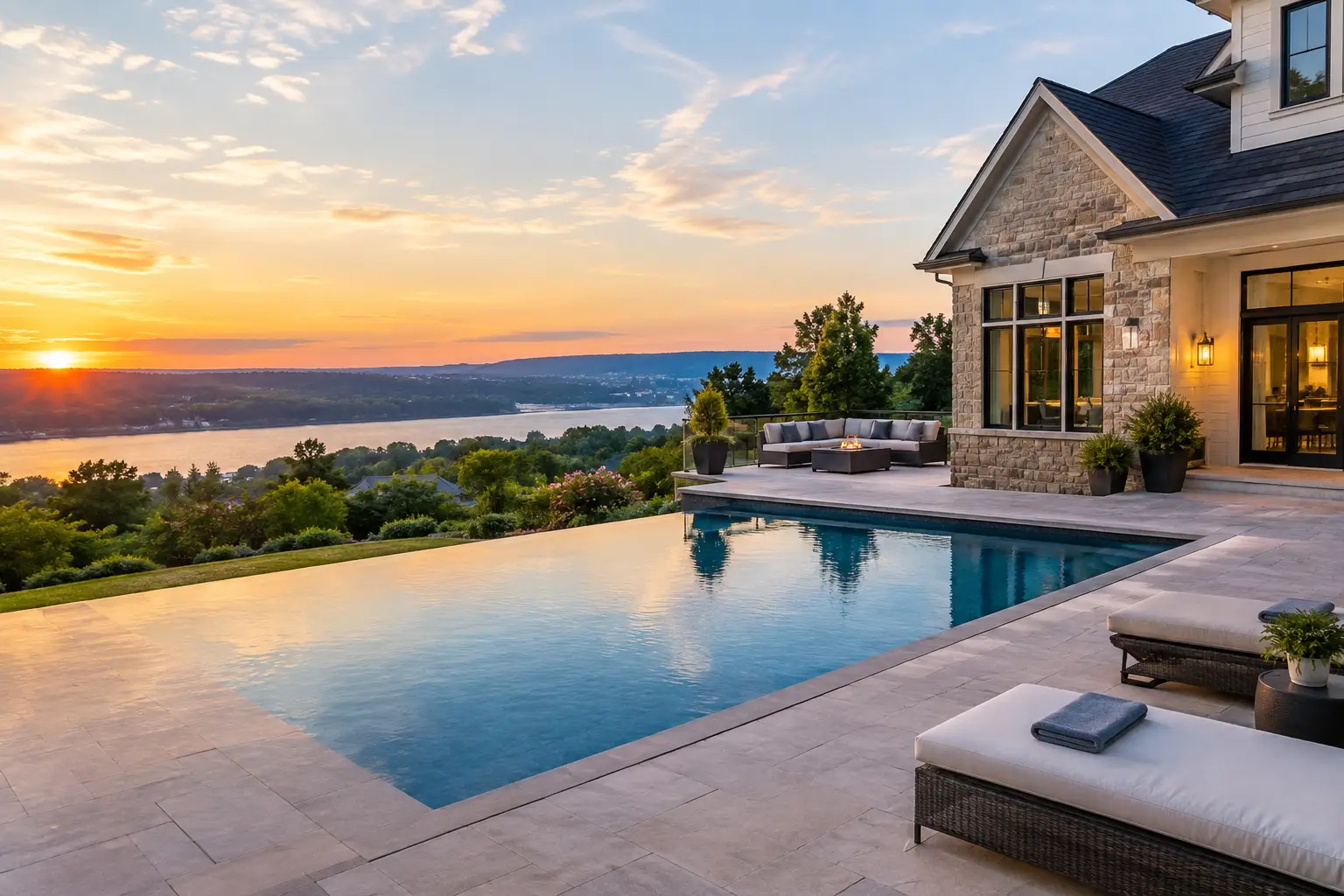
A large lot is not automatically private. Mature landscaping, topography, adjacent home placement, road exposure, and sight lines from neighboring properties all affect how a yard feels. This is especially relevant for homes with pools, outdoor kitchens, terraces, or extensive glass walls.
During a showing, take time to stand outside rather than viewing the yard only from inside. Consider what can be seen and heard from the property at different times of day. A home near a busy road may be perfectly acceptable for one buyer and a deal-breaker for another. The same is true for homes bordering preserved land, schools, athletic fields, or commercial areas.
What to Look for Beyond High-End Finishes
Luxury properties are often marketed through visual features: designer kitchens, spa-style bathrooms, custom millwork, smart-home systems, and resort-like outdoor spaces. These elements matter, but they should not distract from the systems and construction quality that protect the investment.
Newer construction may offer current layouts, energy-efficient equipment, and lower near-term maintenance needs. However, buyers should still understand the builder's reputation, warranty terms, drainage plan, materials used, and the quality of work behind finished walls. A recently completed home can be attractive, but it is not automatically free of issues.
Older luxury homes can provide irreplaceable architectural detail, mature landscaping, and established neighborhood character. They may also require more careful due diligence. Roof age, electrical capacity, plumbing updates, window condition, insulation, foundation maintenance, and heating and cooling systems deserve close attention. In a larger home, deferred maintenance can become expensive quickly.
A thorough inspection is essential, but buyers should also ask practical questions about ongoing ownership. How many zones serve the home? What does it cost to heat and cool? Is the pool equipment current? Are generators, irrigation systems, elevators, security systems, or home automation features maintained through service contracts? Sophisticated features can improve daily life, yet they also create responsibilities that should be understood before closing.
Layout Often Matters More Than Square Footage
Square footage is a useful reference point, not a measure of livability. A 6,000-square-foot home with disconnected rooms or an awkward flow may feel less functional than a smaller property designed around how people live now.
Consider where daily activity will happen. Is the kitchen connected to family space and outdoor entertaining areas? Are bedrooms appropriately separated for privacy? Is there a first-floor suite for guests, multigenerational living, or future flexibility? Does the home offer a comfortable work-from-home setup without turning a bedroom into a permanent office?
For buyers who entertain, the transition between indoor and outdoor space deserves special attention. A beautiful patio is less useful if it is difficult to access from the kitchen or if the outdoor area lacks shade, lighting, storage, or convenient facilities. For households with school-age children, mudroom placement, play space, and the relationship between bedrooms and common areas may matter more than formal rooms that are rarely used.
There is no universal luxury layout. The right one is the layout that reduces friction in your own routine.
The Financial Picture Includes More Than the Purchase Price
Northern New Jersey buyers are generally familiar with the importance of property taxes, but luxury-home decisions require a broader ownership analysis. Taxes can vary materially from one municipality to another, and a property that has been recently renovated, expanded, or reassessed may have a different tax trajectory than comparable homes nearby.
Ask for context rather than treating one annual tax figure as the complete answer. Understand whether the assessment reflects the home's current condition, whether there have been recent appeals or changes, and how local tax patterns compare with similar properties. If a home is in a community with association fees, those costs should be reviewed alongside tax obligations, insurance, utilities, and anticipated maintenance.
Buyers should also consider resale from the start. This does not mean choosing a home solely for the next buyer. It means recognizing that an unusually customized property, a difficult location, or a floor plan with limited flexibility may narrow the future buyer pool. Distinctive architecture can be a major asset when it is well executed and aligned with the neighborhood. It can be more challenging when it feels out of scale or overly personal.
How Sellers Can Position Luxury Homes Effectively
For sellers, the strongest luxury marketing begins before photography and staging. A pricing strategy should reflect the home's condition, setting, improvements, competition, and likely buyer profile. A nearby sale is not automatically a direct comparison if the two properties differ in privacy, lot usability, renovation quality, or access to transportation and community amenities.
Preparation should focus on the elements buyers cannot easily overlook. Deferred maintenance, cluttered outdoor areas, dated mechanical systems, and unclear property documentation can create hesitation even when the home is visually impressive. Sellers benefit from identifying which improvements truly support marketability and which upgrades are unlikely to produce a meaningful return.
The story of the property also matters. Buyers want to understand how the home lives: morning light in the kitchen, the ease of reaching town, the privacy of the backyard, the quality of the primary suite, or the usefulness of a finished lower level. The goal is not to oversell. It is to give qualified buyers enough context to see why the home stands apart.
A Better Way to Evaluate the Search
The most productive luxury-home search is usually not built around a single online filter. Start with a clear picture of your nonnegotiables, then separate them from preferences. Commute time, school priorities, bedroom count, first-floor living needs, and budget boundaries tend to be nonnegotiable. A pool, a newer kitchen, or a particular exterior style may be preferences, even if they feel very important at the beginning.
Then compare homes in the context of their towns and neighborhoods. A slightly smaller home in a location that fits your routine may offer more value than a larger property that complicates it. Conversely, a home requiring some cosmetic work may be a better long-term choice when the location, land, and core structure are difficult to replicate.
The right luxury property should feel impressive, but it should also make everyday life easier. When the home, neighborhood, and ownership costs work together, the decision becomes more than a purchase. It becomes a setting that can support the next chapter of your life with confidence.