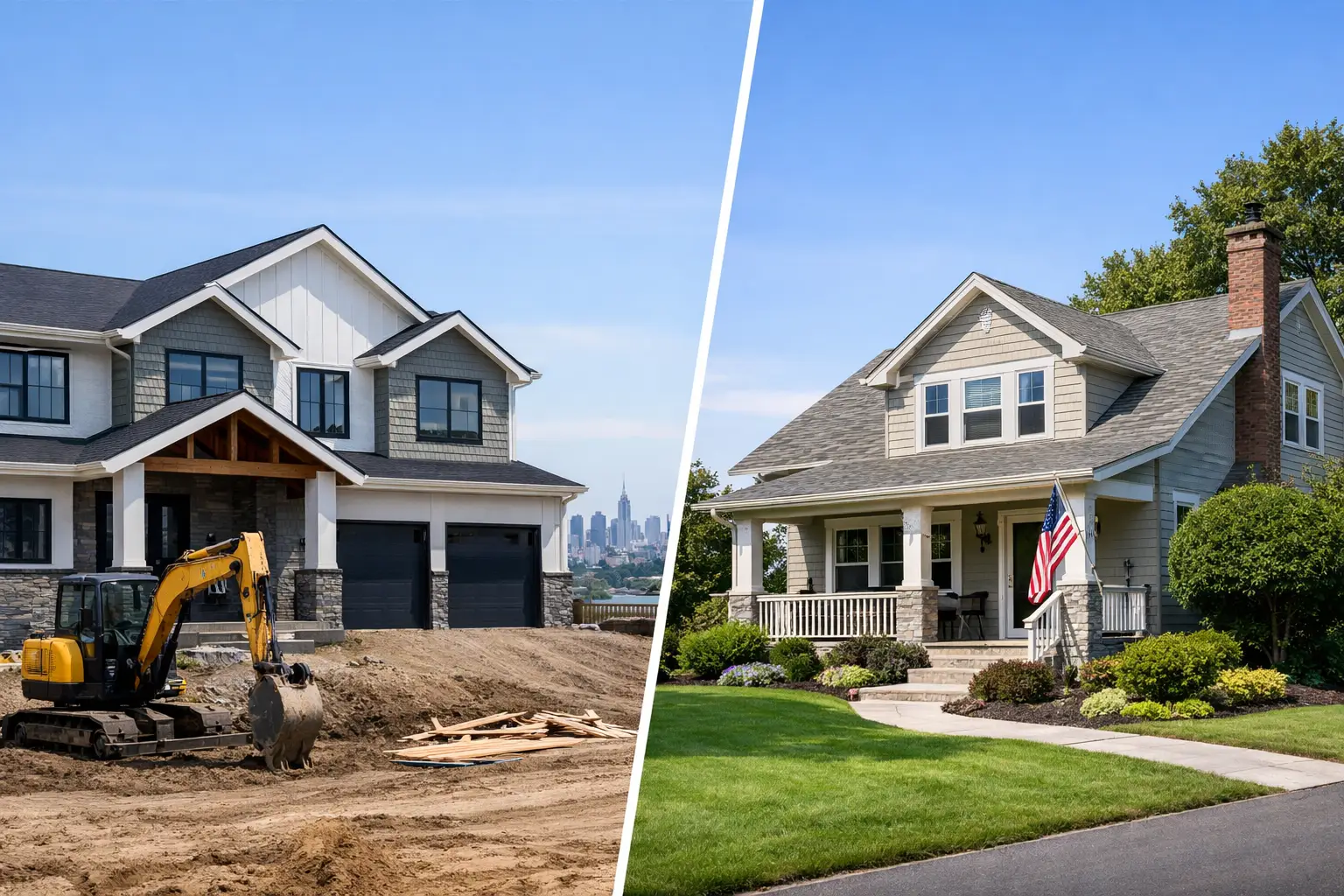
A newly built home can offer clean lines, modern systems, and the appeal of being the first owner. A resale home may place you closer to a train station, an established downtown, or a school community you already know fits your family. When comparing new construction vs resale homes in Bergen County, the better choice is rarely just about age. It is about location, budget certainty, timing, maintenance tolerance, and how you plan to live in the home over the next several years.
In Northern New Jersey, where many desirable towns are already well developed, buyers are often choosing between a new home built on a teardown lot and an older home with character, mature landscaping, and an established neighborhood setting. Both can be excellent purchases. The right answer depends on the details behind the listing.
New Construction vs Resale Homes: The Core Difference
New construction generally gives buyers more predictability around the home’s physical condition. The roof, HVAC equipment, electrical panel, plumbing, appliances, windows, and finishes are new. Many builders also offer a warranty, although buyers should understand exactly what it covers, for how long, and what steps are required to make a claim.
A resale home offers a known property in a known setting. You can see the landscaping in every season, observe traffic patterns, speak with neighbors, and evaluate how the home has held up over time. The layout may be less open, the systems may be older, and updates may be necessary, but the home’s relationship to the neighborhood is already established.
For buyers relocating to Bergen County, that distinction matters. A beautiful new home may be available on a busy road or farther from the town center than expected. An older colonial in a sought-after neighborhood may need renovation, but it may offer walkability, a larger lot, or a more convenient commute.
What New Construction Can Offer
Modern layouts and current building standards
Many buyers are drawn to new construction for practical reasons, not just aesthetics. Newer homes often include open kitchens, larger primary suites, dedicated home offices, higher ceilings, attached garages, and finished lower levels designed for today’s routines. Energy-efficient windows, insulation, heating and cooling systems, and smart-home features can also reduce immediate maintenance concerns.
In a competitive Bergen County market, move-in-ready condition can be especially valuable for households that do not want to coordinate contractors shortly after closing. Families relocating for a new job or school year may prefer a home where they can unpack without first replacing a boiler or renovating a kitchen.
Fewer near-term repair projects
With a resale property, a buyer may need to budget for deferred maintenance even when the home appears well cared for. A new roof, driveway, drainage work, windows, or HVAC replacement can be expensive. New construction lowers the likelihood of those major early expenses, though it does not eliminate all costs. New homes still need window treatments, landscaping, storage solutions, security systems, and occasional post-closing adjustments.
Potential customization
If you purchase early enough in the building process, a builder may allow selections for cabinetry, tile, flooring, fixtures, paint colors, or appliances. That can be appealing, but it is important to distinguish included finishes from upgrades. A base price can change quickly when buyers select premium materials or add features that are standard in competing resale homes.
The Trade-Offs of Buying New
New construction is not automatically simpler. In Bergen County, much of it is built on infill lots or former home sites. That can mean a brand-new house in an older neighborhood, but it may also mean a narrower lot, limited backyard space, close proximity to neighboring homes, or a location shaped by what land was available rather than what is most convenient.
Price is another consideration. New homes often command a premium for condition, design, and the absence of immediate projects. Buyers should compare the total cost, not just the list price. Include upgrades, property taxes, landscaping, fencing, window treatments, and any expenses that may not be complete at closing.
Timing can be less certain when a home is still under construction. Weather, supply availability, inspections, permit timing, and final municipal approvals can affect the delivery date. If you have a lease ending, a school enrollment deadline, or a home sale that must close on schedule, build in flexibility.
A new home also needs an inspection. Municipal inspections and a certificate of occupancy serve important purposes, but they do not replace an independent buyer inspection. A qualified inspector can identify installation issues, incomplete items, drainage concerns, or systems that need adjustment before closing. For homes with a lower level, paying close attention to grading, sump pumps, and water management is particularly worthwhile.
Why Resale Homes Remain So Competitive
Established locations and neighborhood character
Resale homes often have one advantage that cannot be built into a new property: a mature setting. In towns such as Ridgewood, Glen Rock, Wyckoff, Tenafly, Oradell, and many other Bergen County communities, established homes may be closer to parks, shops, schools, houses of worship, or commuter transportation.
The lot can be a meaningful part of the value. Older homes may have larger yards, mature trees, and more separation from neighboring properties than newer homes built on subdivided or teardown lots. That is not universal, but it is worth comparing carefully when two homes have similar square footage.
More visible history
A resale home lets buyers review what has happened over time. You can ask about roof age, renovations, utility costs, prior water issues, permits, and maintenance records. An inspection may reveal concerns, but it can also help create a realistic ownership plan: replace the furnace in several years, update the electrical service when renovating, or budget for exterior improvements over time.
Older homes can bring charm that is difficult to replicate, including original millwork, fireplaces, hardwood floors, and architectural detail. The trade-off is that an older home may have smaller closets, lower ceilings, fewer bathrooms, or a layout that does not match every buyer’s preferences.
Potential value through renovation
A resale home in the right location may give a buyer the opportunity to improve the property over time. That can be a smart approach when the neighborhood, lot, and commute are stronger than what is available in a new build at the same price point.
However, renovation plans should be grounded in local resale reality. Not every improvement returns dollar for dollar, and construction costs can be substantial. Before making an offer based on a future addition or renovation, consider zoning, lot coverage, setbacks, permit requirements, and the price range buyers support in that particular neighborhood.
Costs That Deserve a Closer Look
The purchase price is only one part of the decision. For both new and resale homes, property taxes deserve careful review. A newly constructed home may have a tax figure based on the prior structure or vacant land before the new assessment is fully reflected. Buyers should ask how the property is currently assessed and prepare for the possibility of a future tax adjustment.
With a resale home, review the current taxes, but also consider whether a major renovation or reassessment could affect them. Insurance costs can vary based on the home’s age, replacement cost, location, and features. If a property is near a waterway or within an area with flood-related considerations, buyers should investigate insurance requirements and flood history early in the process.
For older homes, add a realistic maintenance reserve. For new construction, reserve funds for finishing touches and warranty-period items. Neither choice is maintenance-free. They simply create different categories of ownership costs.
How Buyers Can Make the Right Comparison
The strongest comparison is not new versus old in the abstract. It is one specific home against another, viewed through your priorities. Start with the location: Does the street, commute, school assignment, lot, and daily convenience work for your household? Then compare condition, total monthly cost, likely repairs or upgrades, and the home’s fit for the next five to ten years.
A buyer who values walkability and an established neighborhood may reasonably choose a well-maintained resale home and plan selective updates. A buyer with limited time for projects may decide that the premium for new construction is worthwhile. A growing family may favor the larger yard and flexible renovation potential of an older home, while a downsizing buyer may place more value on modern systems and low-maintenance living.
For sellers, the same distinction affects strategy. A resale home does not need to look new to compete, but it should be priced and presented honestly against newer inventory. Clear maintenance records, thoughtful preparation, and accurate local positioning can help buyers see the value beyond a brand-new kitchen or freshly built exterior.
Before committing to either path, spend time on the street at different hours, study the town’s practical routines, and look beyond the finishes that photograph well. The home that serves your life best in Bergen County is often the one whose location, costs, and future options remain comfortable long after closing.