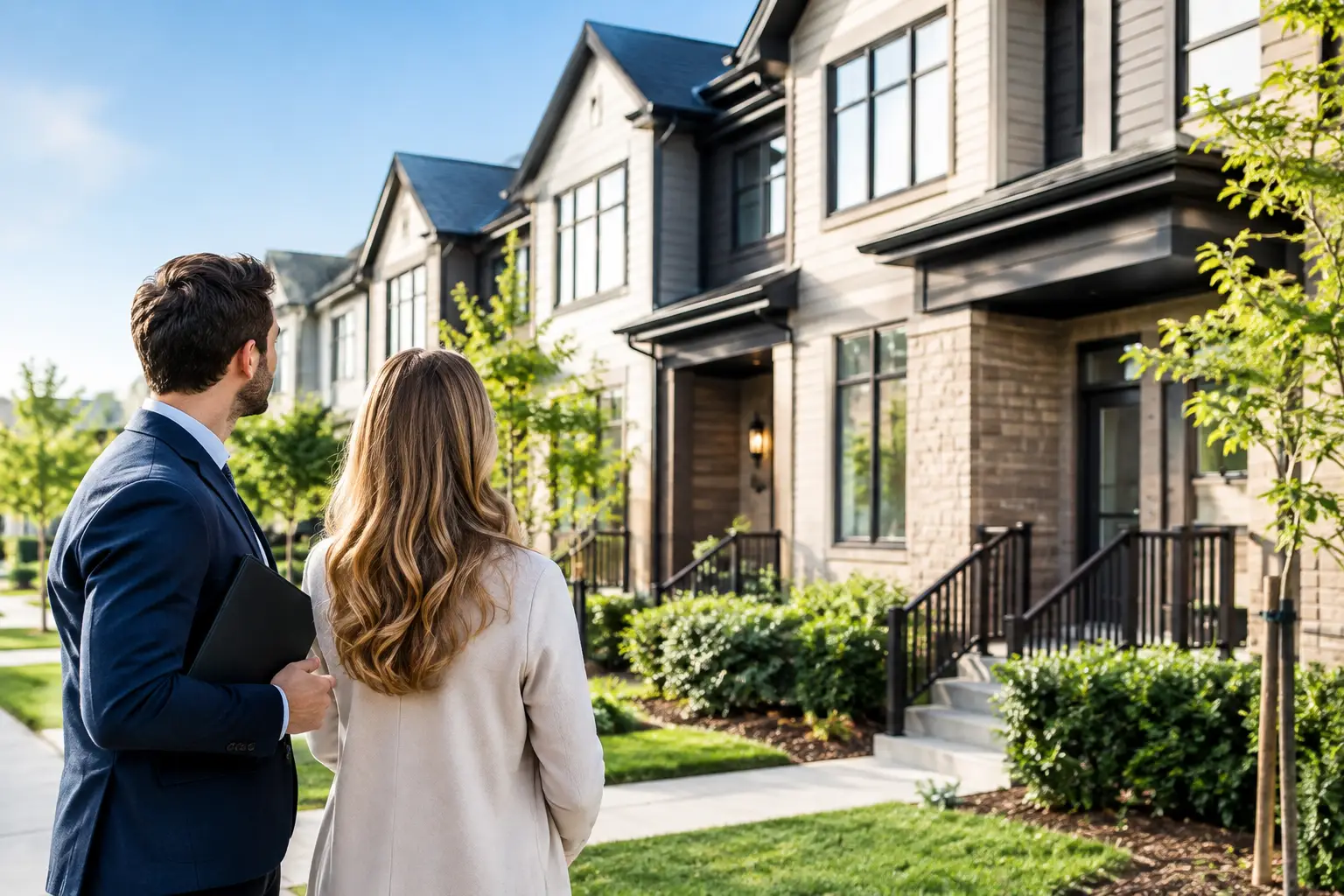
A Bergen townhome guide needs to do more than sort homes by bedroom count and price. In Bergen County, a townhome can mean a newer attached residence with a full homeowners association, a small two-unit property with few formal rules, or a condominium-style community with shared amenities and monthly fees. The right choice depends on how you commute, how much maintenance you want to handle, what you value in a neighborhood, and how long you expect to stay.
For buyers, townhomes can offer a practical middle ground between a condo and a single-family home. For sellers, they require a different pricing and marketing strategy than detached properties. Understanding the local differences is where a smart decision begins.
What Defines a Townhome in Bergen County?
Most buyers picture a townhome as a multi-level home that shares one or two walls with neighboring residences, often with a private entrance, garage, and small outdoor area. That is generally accurate, but the ownership structure deserves closer attention.
Some Bergen County townhomes are condominiums. You own the interior of the unit while the association maintains exterior elements and common areas. Others are fee-simple townhomes, where you own the structure and land but still belong to an association that may handle landscaping, snow removal, or community roads. A smaller attached home may have no association at all.
Those distinctions affect your monthly budget, insurance needs, renovation flexibility, and eventual resale process. Before making an offer, buyers should review the governing documents, budget, reserve funding, rules, insurance coverage, pending assessments, and rental restrictions. A low monthly fee is not automatically better if the community has deferred major maintenance or limited reserves.
Bergen Townhome Guide: Choosing the Right Location
Bergen County is not one uniform market. A townhome near the Hudson River serves a different buyer than one in the county's northwest corner. Start with your daily routine rather than a map search alone.
For New York City access
Fort Lee, Edgewater, Cliffside Park, and parts of Englewood and Hackensack are common starting points for buyers who prioritize access to Manhattan. These communities can offer bus access, proximity to major roadways, restaurants, and a more connected feel than many suburban locations. They can also bring denser development, more traffic, smaller outdoor spaces, and, in some buildings or communities, higher association fees.
For buyers who commute several days each week, it is worth testing the trip at the actual time you would travel. Driving time, bus availability, parking costs, and last-mile logistics can change the value equation quickly.
For a suburban neighborhood feel
Towns such as Ridgewood, Glen Rock, Allendale, Ramsey, Mahwah, Wyckoff, and Franklin Lakes appeal to buyers seeking more residential surroundings, recreational space, and access to Bergen County's suburban amenities. Townhome inventory may be more limited in some of these communities, particularly in established neighborhoods dominated by single-family homes.
When a well-located townhome becomes available in a town with limited supply, competition can be meaningful. Buyers should distinguish between a premium paid for the individual property and a premium tied to the town's broader desirability, school district, commuter options, or limited housing choices.
For value, convenience, or redevelopment potential
Hackensack, Teaneck, Englewood, Paramus, and parts of northern Bergen County can offer a wider range of attached-home choices. Depending on the neighborhood, buyers may find newer construction, more square footage, or a lower entry point than in some highly competitive commuter towns.
Value should never be measured by price alone. Property taxes, association fees, parking, building age, and future special assessments all matter. A home that appears less expensive at first glance may carry a monthly ownership cost similar to a higher-priced property elsewhere.
The Monthly Cost Is More Than the Mortgage
Townhome buyers should calculate the complete monthly picture before settling on a price range. In Bergen County, property taxes can vary significantly by municipality and can meaningfully affect affordability. Association fees are equally important, especially in communities with amenities, elevators, gates, pools, clubhouses, or extensive common grounds.
Ask what the fee covers. Exterior maintenance, roof replacement, landscaping, snow removal, water, sewer, trash, master insurance, and amenities may all be included, or only a portion may be covered. If the association handles a major expense, compare that convenience with the fee rather than treating it as an extra cost without value.
Insurance requires attention as well. Condo-style ownership often calls for an HO-6 policy, while fee-simple townhomes may require coverage closer to a single-family homeowners policy. The master policy's deductible and coverage limits can affect owners if a loss occurs. Your insurance professional can explain the policy details, but buyers should obtain the association documents early enough to ask informed questions.
Evaluate the Home Beyond the Staging
Townhomes have features that can make daily life easier or harder depending on your household. A garage may be essential for some buyers, while others care more about guest parking, storage, a ground-level office, or a fenced patio. In a multi-level layout, stairs are not a minor detail. Consider how the floor plan works now and how it may work if your needs change.
Pay particular attention to sound transmission between units, natural light, window placement, private outdoor space, and the condition of shared walls or roofs. End units often provide extra windows and a more open feel, but they may carry a price premium and more exterior exposure. Interior units can be more efficient and sometimes quieter from the street, though that varies by construction.
During inspections, look beyond appliances and finishes. The inspector should evaluate the unit's accessible systems and flag concerns involving water intrusion, HVAC, electrical components, foundations, decks, drainage, and visible roof conditions. In communities with older infrastructure, it is also wise to understand what repairs the association has recently completed and what it expects to address next.
Schools, Services, and Community Fit
For relocating households, school district research is usually part of the townhome search. Confirm the current school assignment directly with the district because attendance boundaries and program options can change. Buyers should also consider the practical routine: drop-off patterns, after-school care, parks, library access, recreation programs, and travel time to work.
Even buyers without school-age children often consider school reputation because it can influence demand and resale. That said, a strong resale outlook can come from several factors, including a convenient location, well-managed association, usable layout, and limited competing inventory. There is no single feature that guarantees value.
Flood exposure is another local consideration in portions of Bergen County. Review the property's flood-zone status, prior water issues when disclosed, drainage conditions, and insurance requirements. A home outside a designated flood zone can still experience drainage challenges, so the property's actual setting matters.
Selling a Bergen County Townhome
Sellers should not assume their townhome will be priced like the detached homes nearby. The most relevant comparisons are recent sales within the same community, followed by comparable townhomes in nearby locations with similar ownership structure, square footage, condition, fees, and amenities.
Association documents can influence a buyer's confidence, so prepare them early. A current budget, rules and regulations, financial statements, resale package requirements, known assessments, and move-in procedures should be organized before a buyer asks. If the association has completed a major project, such as roofing or siding, that can be useful context when presented clearly.
Presentation matters because townhome buyers compare convenience as much as space. Declutter garages, storage rooms, patios, and entryways. Make the layout easy to understand, especially if a lower level can serve as an office, guest area, or recreation space. If there are parking rules, pet restrictions, or rental limitations, communicate them accurately rather than leaving buyers to uncover them later.
A thoughtful pricing strategy also recognizes competition. If similar units are for sale in the community, buyers will compare updates, location within the development, outdoor space, garage configuration, and fee levels immediately. The strongest listing is not always the most renovated one. It is the one positioned honestly and competitively for its specific alternatives.
When a Townhome Is the Better Choice
A townhome can be an excellent fit for buyers who want more room and privacy than many condos provide but do not want the full maintenance responsibility of a detached home. It can also work well for downsizers who value a garage, manageable space, and fewer exterior chores, or for professionals who want a lock-and-leave lifestyle near transportation and local amenities.
The trade-off is shared governance. Association rules, fees, approval procedures, and neighboring homes are part of the ownership experience. Buyers who want complete control over exterior changes, pets, parking, rentals, or landscaping may be happier with a single-family property, even if it requires more upkeep.
The best Bergen County townhome is not simply the newest unit or the lowest-priced one. It is the home whose location, financial structure, rules, and layout support the life you plan to live there. Taking the time to compare those details before offering can turn a promising listing into a confident long-term choice.